New York Taxi Advertising: Why It Still Works (And How to Actually Use It in 2026)
A comprehensive guide to taxi advertising in New York City. Learn about taxi top ads, digital LED tops, vehicle wraps, TaxiTV, costs, and how to plan a high-impact mobile OOH campaign in NYC for 2026.
CarTop Ad Team
February 17, 2026
Why New York City Is Still the Taxi Advertising Capital
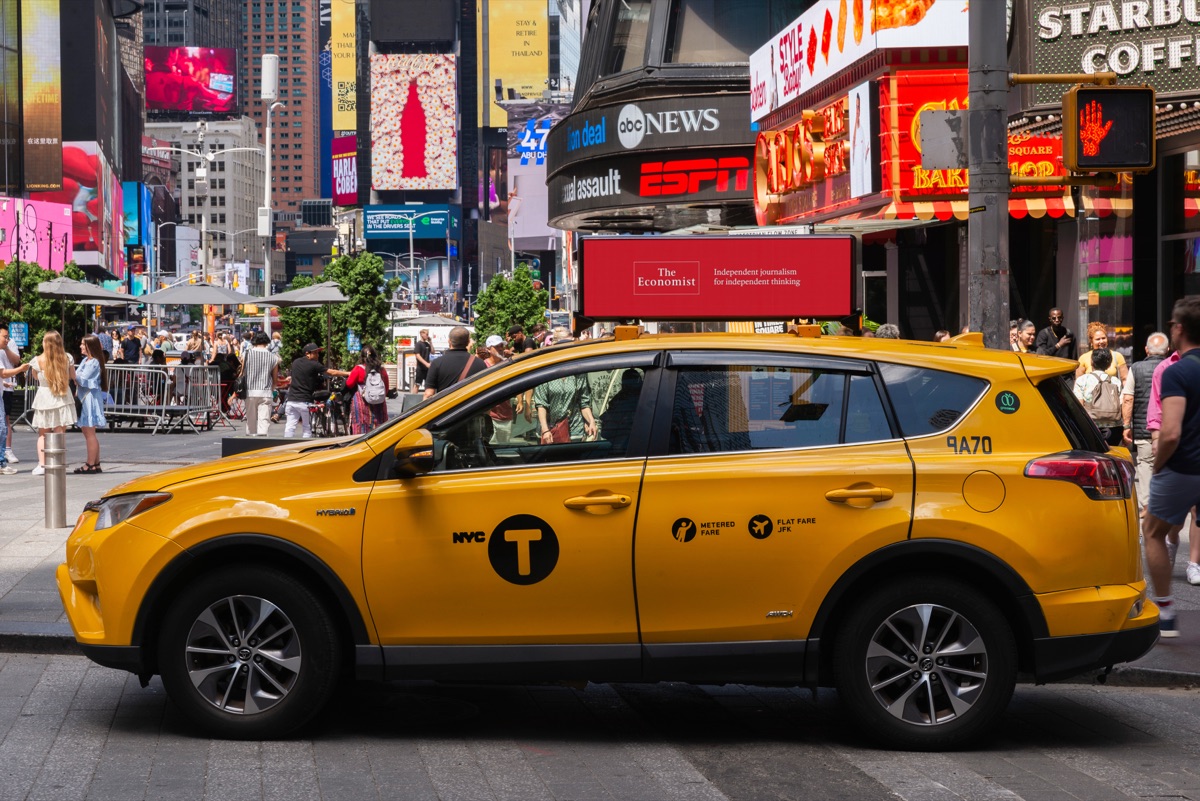
There's a reason every conversation about taxi cab advertising eventually comes back to New York. The city has over 13,000 licensed yellow cabs, according to NYC's Taxi and Limousine Commission, and those cabs are averaging around 139,000 daily trips as of late 2025. That number has actually been climbing — taxi trips grew nearly 15% year-over-year through the fall. So no, ride-sharing hasn't killed the yellow cab. Not even close.
What makes NYC taxi advertising uniquely powerful is the environment itself. Manhattan is a walking city. People don't look at their phones while crossing 7th Avenue (well, some do, but you get the point). They look up. They look around. And when a bright taxi top rolls through Midtown at 5 PM, thousands of pedestrians, drivers, and tourists are going to see that message whether they want to or not. That's the beauty of it: taxi ads in New York City aren't optional viewing. They're part of the streetscape.
Compare that to a digital ad someone scrolls past in 0.3 seconds on Instagram. There's something to be said for a medium you can't skip, block, or mute.
Types of Taxi Advertising in New York City
When people say "taxi advertising," they usually picture the classic lit-up box on top of the cab. But there are actually several distinct formats, each with different strengths and price points. Here's how they break down:
Taxi Top Ads (Static)
This is the traditional format — a backlit panel mounted on the roof of the cab. It runs 24/7, visible from the front, back, and sides depending on the design. Static taxi tops are straightforward: you design a creative, it gets printed and installed, and it stays up for the duration of your campaign (usually four weeks minimum). They're especially effective at night when the backlighting makes them pop against the dark city streets.
Digital Taxi Tops (LED)
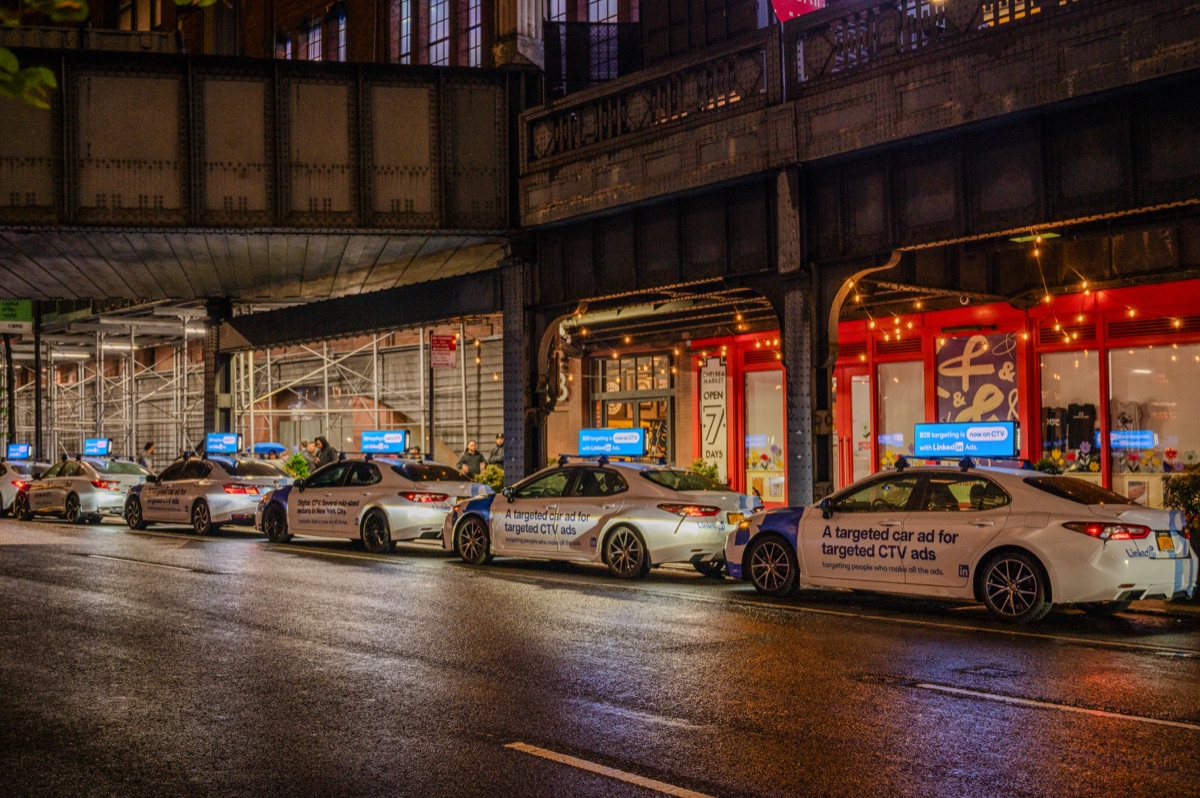
This is where things have gotten interesting. Digital LED taxi tops have essentially turned each cab into a mobile digital billboard. These high-resolution screens can rotate multiple ads, update remotely, and even change content based on time of day or GPS location. If a cab is near Times Square during a Broadway premiere, you could theoretically serve a different creative than when it's cruising through the Financial District at lunchtime. Companies like Firefly and SOMO operate large networks of these digital tops across the NYC fleet, and the technology has matured considerably over the past couple of years.
Car Wraps (Full and Partial)
A full taxi wrap transforms the entire vehicle into your brand's rolling canvas. You've probably seen these around the city — they're impossible to miss. A bright, well-designed wrap on a yellow cab is the most visually dominant form of taxi advertising you can buy. Partial wraps cover specific sections (doors, trunk, or hood) and cost less, but still deliver strong visibility. The downside? Production costs are significantly higher, and installation takes time. But if you're launching a product or running a high-profile event campaign, nothing grabs attention in NYC traffic like a fully wrapped cab.
In-Car Screens (TaxiTV)
The screens mounted behind the driver and passenger seats — often called TaxiTV — are a different animal entirely. These target passengers, not pedestrians. Riders are essentially a captive audience for the duration of their trip, and the screens run a mix of news, entertainment, and advertising content. The recall rates for in-car taxi ads are reportedly quite high, which makes sense: you're sitting in a confined space with a screen six inches from your face. Some networks have reported over 20 million monthly impressions across their in-car screens nationally.
Trunk Ads
This one's simple and cheap. A static ad placed on the trunk of the taxi, visible mainly to the car behind it. In a city where you spend half your life stuck behind a cab at a red light, trunk ads get solid dwell time. It's probably the most overlooked format, but for budget-conscious campaigns, it punches above its weight.
What Does Taxi Advertising in NYC Actually Cost?
Let me be real: pricing for New York taxi advertising is not as transparent as it should be. Most vendors want you to "request a quote," and the numbers vary wildly depending on fleet size, campaign duration, and whether you're booking directly or through an agency. But here's the general ballpark based on what I've gathered from industry sources:
- Interior screen ads (TaxiTV): Starting from ~$30 per screen (minimum buy required)
- Static taxi tops: $100–$200 per cab for a four-week cycle
- Digital taxi tops (LED): Similar range with more flexibility and better engagement
- Trunk ads: ~$150 per car
- Full car wraps: $2,000+ per vehicle (including production and installation)
The important thing to understand: this isn't like buying a Facebook ad where you can start at $5/day. Most campaigns have minimum spends of $5,000 or more per format. But when you calculate the CPM (cost per thousand impressions), taxi ads in New York consistently come in lower than traditional billboards, and astronomically lower than prime Times Square digital placements.
Who Should Consider Taxi Advertising in New York?
Not every business needs to be on a taxi. If you're running a local bakery in Queens, a taxi top in Midtown probably isn't your best move. But for certain categories, taxi advertising in NYC makes a ton of sense:
- Entertainment brands — Broadway shows, concerts, streaming platforms
- Food and beverage — restaurants, bars promoting new locations or seasonal menus
- Fashion and luxury brands — especially during Fashion Week and tentpole events
- Tech companies and apps — taxi wraps work incredibly well for app download campaigns with QR codes
- Financial services and healthcare — awareness campaigns that benefit from real-world media credibility
The common thread? High-traffic, high-visibility campaigns where you need to saturate a specific geography. If your target audience is "people who are physically in Manhattan," it's tough to find a more efficient channel.
The Digital Shift: LED Tops and Programmatic Buying
If you haven't looked at NYC taxi advertising in a few years, the landscape has changed dramatically. The shift from static to digital has been the biggest story in this space. Modern digital taxi tops use LED screens with GPS integration, meaning campaigns can be targeted by neighborhood, time of day, or even triggered by events.
Some platforms are now integrated with programmatic buying systems — the same infrastructure that powers online display ads — which means you can buy taxi top impressions the same way you'd buy a banner ad on a website. This solves one of the oldest criticisms of outdoor advertising: measurement. With digital taxi tops, you get real data — impressions based on foot traffic models, geo-targeting confirmation, and attribution insights that were simply impossible with static formats.
A Note for Drivers: Earning Extra While You Drive
I want to take a quick detour here because I think it's worth mentioning for anyone who drives for a living in NYC — whether that's yellow cab, livery, rideshare, or delivery.
You know those digital screens and ad displays we've been talking about? Someone has to carry them. And the drivers who do typically earn extra income just for having the hardware on their vehicle and going about their normal routes. It's passive in the truest sense — you drive the same routes you always do, and the ads generate revenue based on impressions.
If that sounds interesting, take a look at Firefly's driver program. They work with taxi, rideshare, and delivery drivers, and it's one of the more established programs I've come across.
Planning a Taxi Ad Campaign in NYC: Practical Tips
Start with your objective, not the format. Are you trying to build awareness in a specific neighborhood? Drive foot traffic to a store opening? Create buzz around a product launch? The format — tops, wraps, in-car screens — should follow from the goal, not the other way around.
Think about fleet size. A single wrapped cab looks cool, but it won't move the needle. The power of taxi advertising comes from saturation. Most industry people recommend a minimum fleet of 25–50 vehicles for a campaign to have any real impact, and the sweet spot in NYC is often 100+ if your budget allows.
Design for speed. People see a taxi top for 3–8 seconds, max. Your creative needs to communicate a single idea instantly. Big text, strong contrast, one clear call to action.
Time it right. NYC taxi traffic patterns are predictable. Midtown is packed during rush hours and lunch. Downtown and the Lower East Side heat up in the evenings. Digital tops let you target by zone and time window.
Ask about measurement. Any reputable vendor should be able to provide impression estimates based on Geopath data or their own analytics platform. If someone can't tell you approximately how many people will see your ad, that's a red flag.
Don't forget the outer boroughs. Green Boro Taxis operate in Brooklyn, Queens, the Bronx, and Staten Island. If your audience isn't exclusively Manhattan, there are taxi advertising opportunities beyond the yellow cab fleet.
Frequently Asked Questions About New York Taxi Advertising
What is taxi advertising in New York City?
Taxi advertising in NYC refers to placing promotional content on or inside the city's licensed taxi fleet — primarily the iconic yellow cabs. Common formats include rooftop displays (both static and digital LED), full or partial vehicle wraps, trunk panels, and in-car passenger screens (TaxiTV). It falls under the broader category of out-of-home (OOH) and digital out-of-home (DOOH) advertising.
How much does it cost to advertise on a taxi in NYC?
Costs vary by format and fleet size. In-cab screens can start as low as $30 per unit (with minimum buys), static rooftop ads run $100–$200 per cab per four-week cycle, digital tops are in a similar range, trunk ads sit around $150, and full wraps can exceed $2,000 per vehicle including production. Most vendors in NYC require a minimum campaign spend of $5,000 or more.
How many taxis are there in New York City?
NYC has over 13,000 licensed yellow taxi medallions, and the active fleet completes roughly 139,000 trips per day as of late 2025. In addition, green Boro Taxis serve the outer boroughs, and the broader for-hire vehicle ecosystem adds even more potential advertising inventory.
Is taxi advertising effective compared to digital marketing?
Taxi advertising and digital marketing serve different purposes and work best together. Taxi ads excel at geographic saturation, brand awareness, and unskippable visibility in dense urban markets. They can't be blocked or scrolled past, and they build real-world credibility. Many brands use taxi ads as the physical layer of an integrated campaign that includes digital, social, and search.
What's the difference between static and digital taxi top ads?
Static taxi tops use printed panels with backlighting — one message, always visible, no moving parts. Digital taxi tops use LED screens that can rotate multiple ads, update remotely in real time, and even change content based on GPS location or time of day. Digital tops cost similarly to static but offer more flexibility, better measurement, and the ability to run targeted, dynamic campaigns.
Can small businesses afford taxi advertising in New York?
It depends on the format. Interior screen ads and trunk panels are accessible to smaller budgets, especially for neighborhood-targeted campaigns. Full fleet wraps or large digital top buys are more suited to mid-size and larger advertisers. Some vendors offer short-term or limited-zone campaigns that bring the entry cost down.
How do I measure the success of a taxi ad campaign?
Modern taxi ad campaigns — especially those using digital tops — can be measured through impression tracking (using foot traffic and mobility data), GPS-verified zone delivery, brand lift studies, QR code scans, and even direct attribution through integration with programmatic platforms.
Can drivers earn money by carrying taxi ads?
Yes. Several companies work with taxi, rideshare, and delivery drivers who agree to carry ad displays on their vehicles. Drivers earn supplemental income based on their driving activity and the impressions their routes generate.
What types of brands work best with NYC taxi advertising?
Entertainment (Broadway, concerts, streaming), food and beverage, fashion and luxury, tech/apps, financial services, and tourism brands tend to see the strongest results from taxi advertising in New York.
Is NYC taxi advertising regulated?
Yes. Taxi advertising in New York City is regulated by the NYC Taxi and Limousine Commission (TLC). There are content guidelines that advertisers must follow, and ad displays can only be installed on approved devices within licensed vehicles.
This article is written for informational purposes only. The author is not affiliated with any taxi advertising company. Pricing, statistics, and program details may change — always verify directly with vendors before making any decisions. Last reviewed: February 2026.
Want to Learn More About Mobile Advertising?
Explore our complete collection of guides on car top advertising, vehicle wraps, and more.
Browse All Articles